In October of 2018 I traveled to Rio de Janeiro for a work conference and, having never been to South America, I knew I had to seize the opportunity to explore what’s known as the Cidade Maravilhosa (marvelous city) by its locals. I planned to spend a week in Rio and was lucky enough to stay with a colleague who lives in Copacabana. Before traveling, I had friends and family warn me about the need to be extra careful as the city could be dangerous, especially for a single female. I knew I just needed to be smart and stay aware of my surroundings – something I do no matter where I am.
My time in Rio also happened to coincide with the Brazilian general elections, and I happened to see quite a few anti-Bolsonaro protests (and one pro-Bolsonaro march) as I was wandering about the city during my trip. I somehow have a knack for visiting places during interesting times, but perhaps that just adds to the experience.
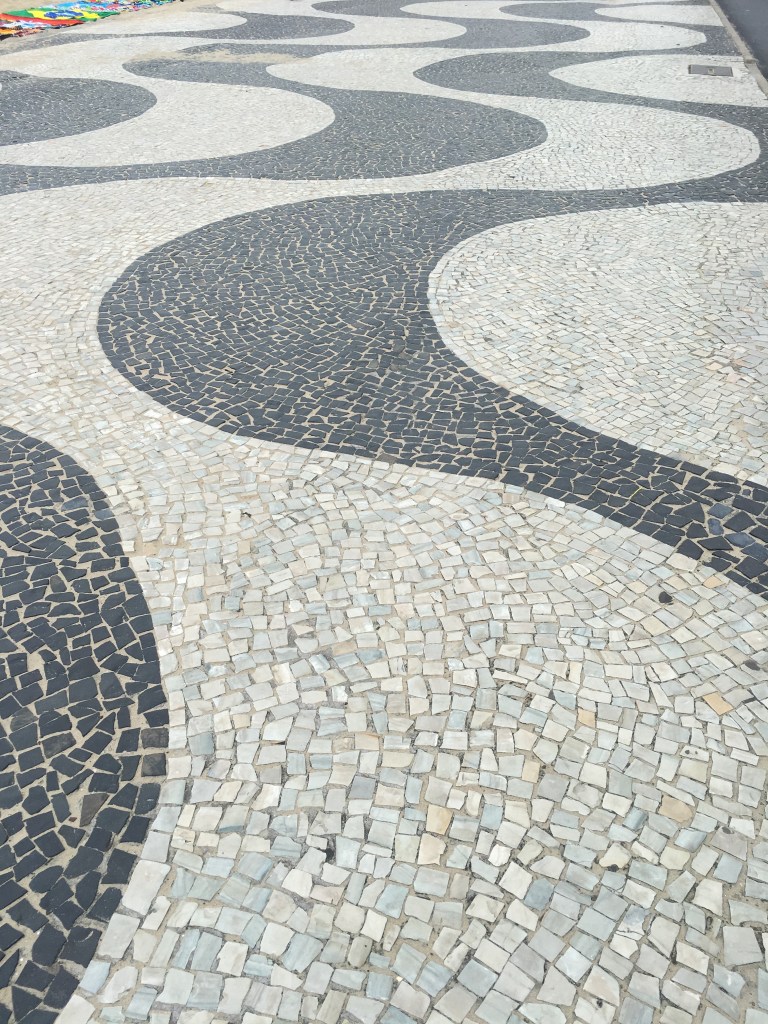
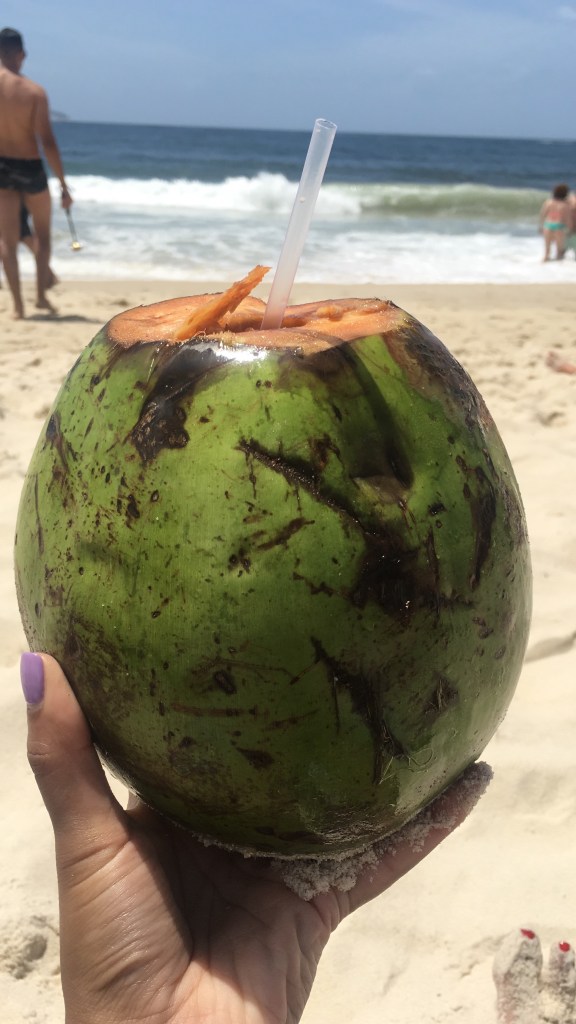
From the moment I arrived in the city, I was taken away by the lushness of the flora, the beautiful sand, the blueness of the ocean, and the warmth of the sun. I quickly learned that along the beach, the pattern of the tiles indicated which part of the city you were in – Copacabana, for example, has the iconic black and white wavy pattern. One of the first things I did was to have a fresh coconut on the beach – there are loads of coconut vendors along the beach so your coconut water craving can easily be satisfied.
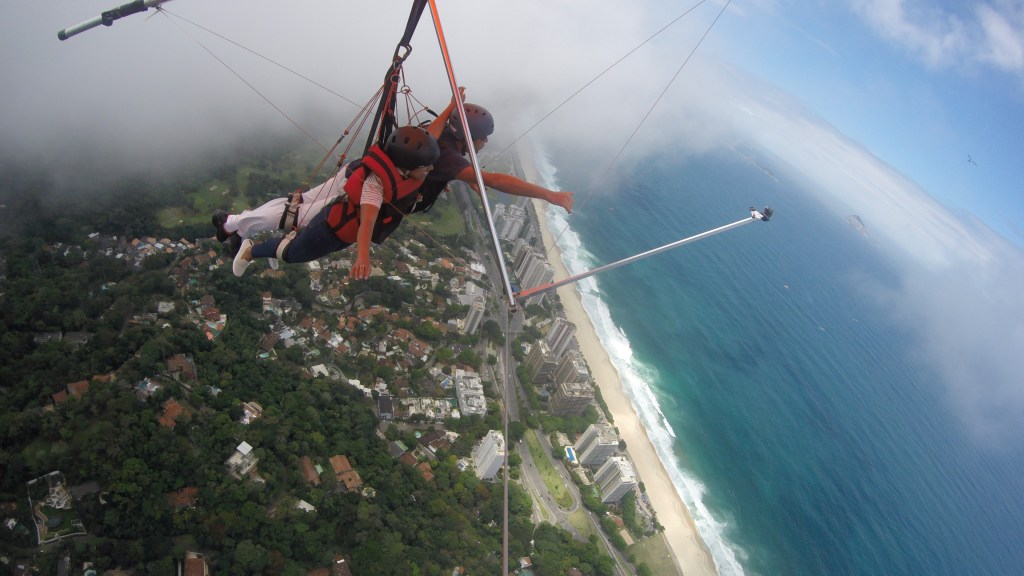
While driving along the coast, I had seen people hang gliding off one of the mountains and spontaneously decided that I had to look into this experience. So, after searching and reading quite a few reviews, I booked my hang gliding experience with a company called Rio Hang Gliding. On a beautiful Sunday morning, I headed over to the São Cornado area where I met a company representative who would take me on to the next stage. After a 10 minute drive, I was at the base of a mountain where lots of people were signing in to go hang gliding as part of the Clube São Conrado De Voo Livre. I had to fill out a liability form and within 15 minutes was on my way up a mountain in the Tijuca Forest to our launch spot for the tandem hang gliding experience.
The entire drive, I was admiring the beauty of the forest while simultaneously wondering if I’d made a huge mistake in deciding to jump off a mountain. However, the moment I left the launch pad, I knew I had made the right decision. Everyone should see Rio from above – the vibrancy of the city’s colors; the stark difference between the blue of the ocean and the green of the forest; the feeling of soaring weightless through the air…there is nothing like it. My 10 minute glide felt like it lasted much longer, and, even 2 years later, the pictures and video from the experience instantly take me back to the pure exhilaration of that moment. I highly recommend a hang gliding experience if you are ever in Rio!

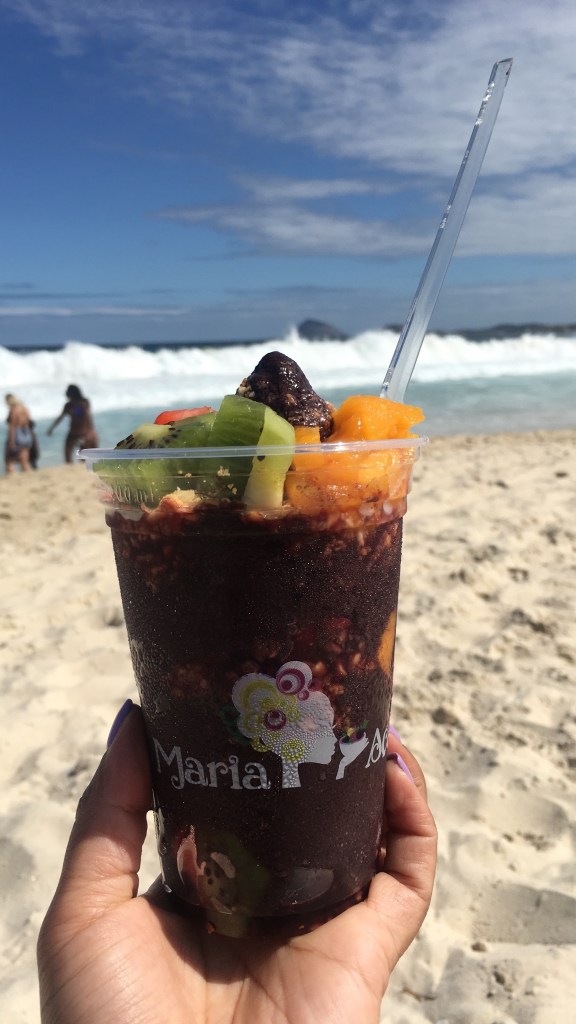
After my amazing hang gliding experience, I went to Maria Açai, a small spot in Copacabana close to where I was staying, for my first açai. I walked the 5 minutes to the beach and sat on the warm sand eating the most delicious açai topped with fresh mango, kiwi, and strawberries. One of the interesting things I noticed was that a lot of cariocas (Rio de Janeiro natives) thought I was Brazilian and tried to speak to me in Portuguese. Luckily, I could reply in my very rusty Spanish, and we were able to understand each other fairly well. I learned this mix of Portuguese and Spanish is actually called Portuñol.
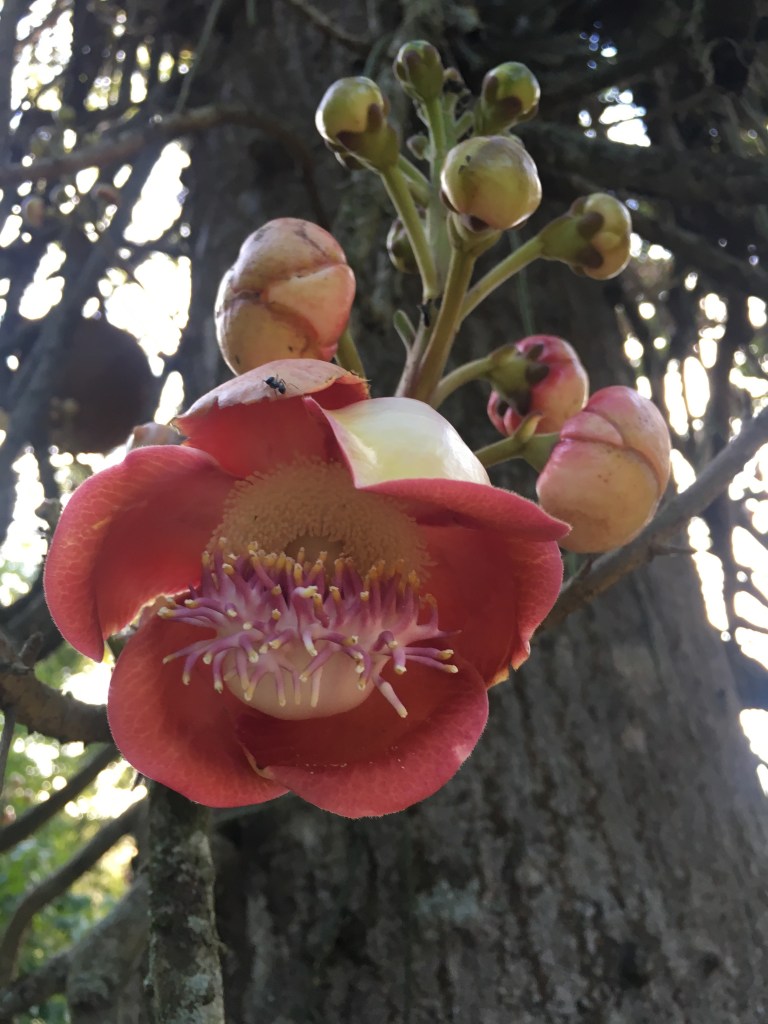
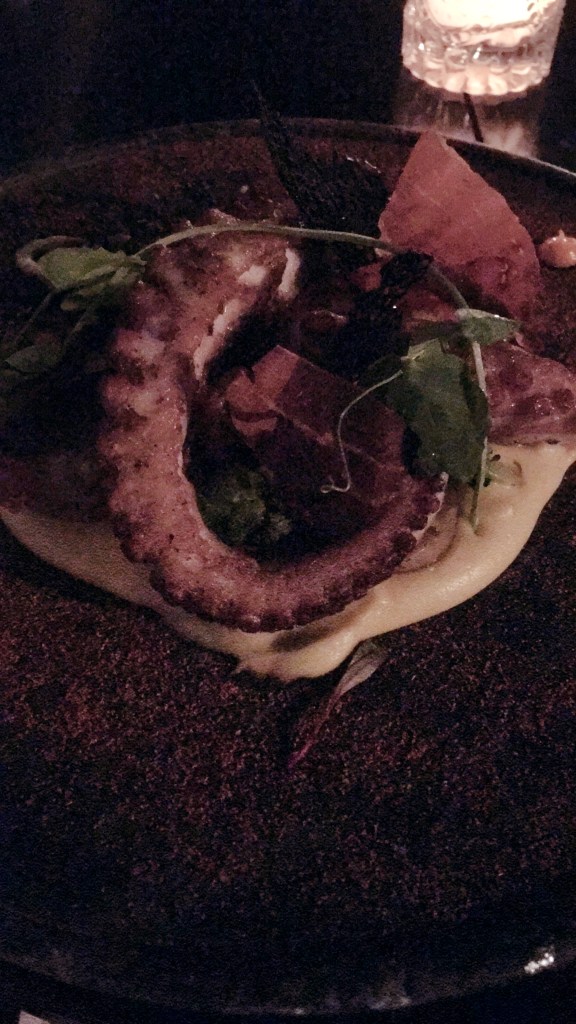
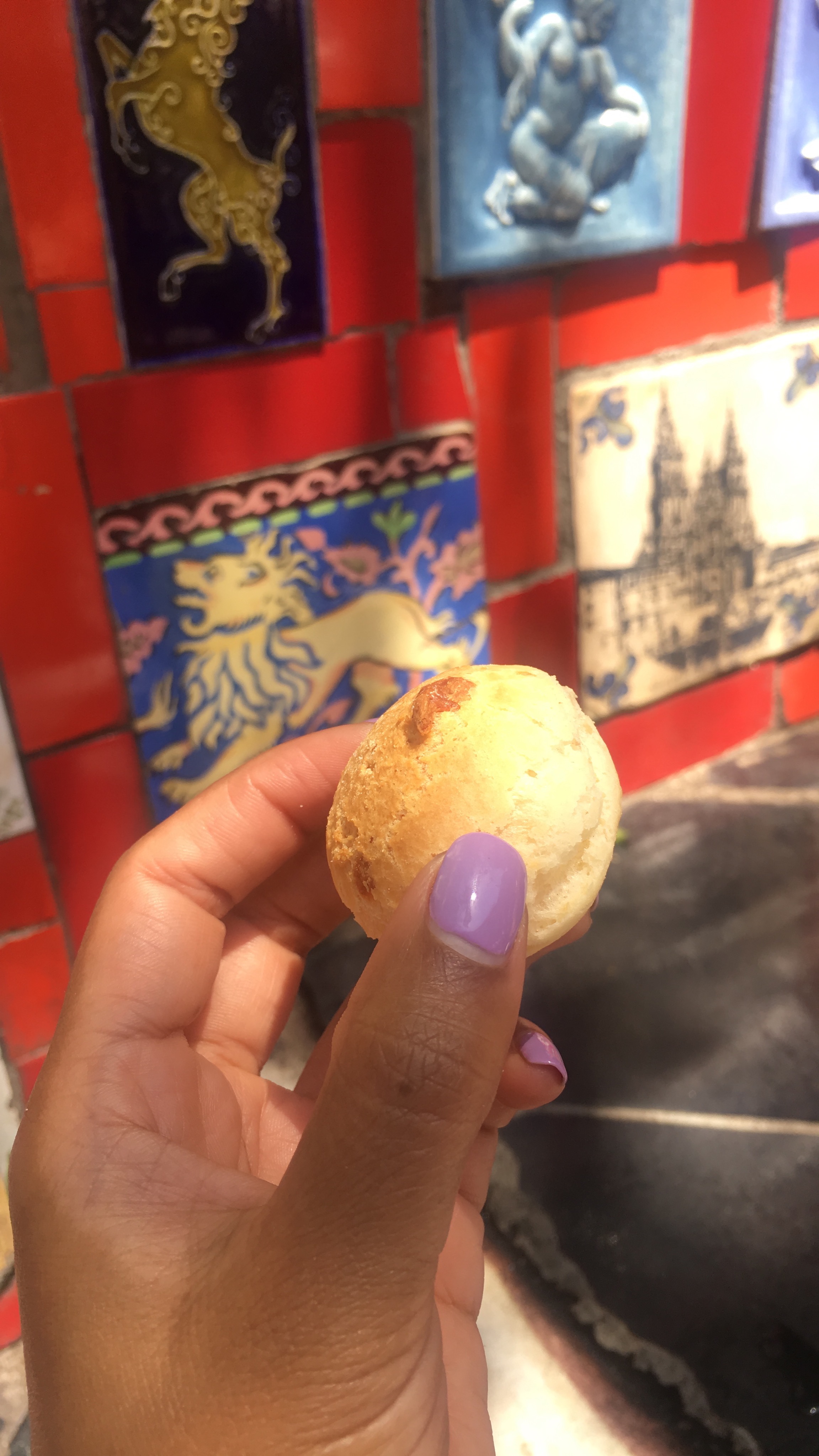
My adventure in the evening consisted of taking the metro to the Jardim Botânico de Rio de Janeiro (Botanical Garden), where I wandered around admiring the different plants and flowers in the expansive garden. I then walked towards Ipanema, first stopping at a mall in the Leblon neighborhood just to see what a mall in Rio was like, and for a quick snack of pão de queijo (cheese balls). My target in Ipanema was a little family-run restaurant called Nosso, which another colleague had recommended to me. I was able to sit up on the roof and had a great seat to enjoy not only the weather, but also my delicious grilled octopus dinner and the live music.
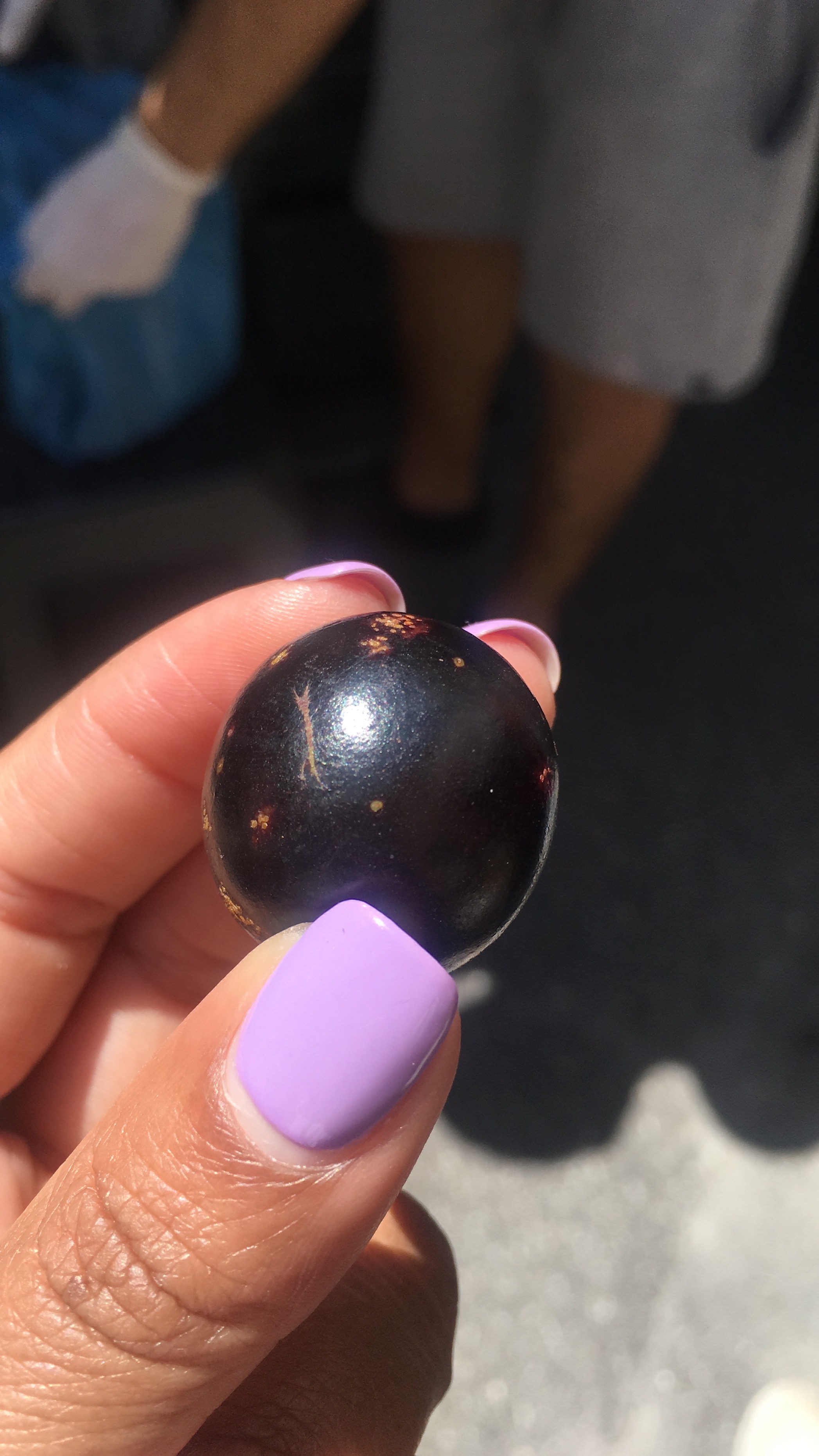
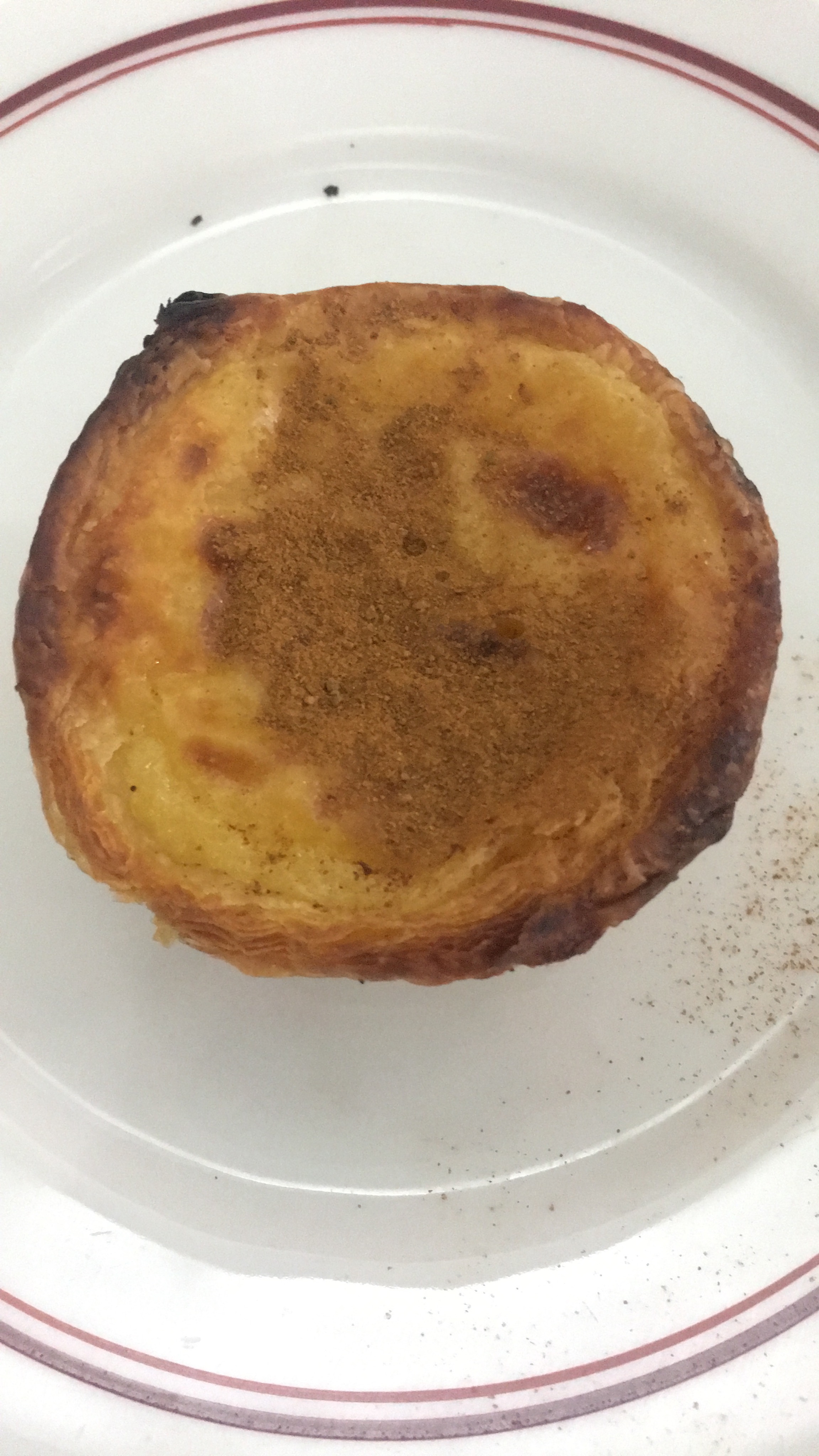
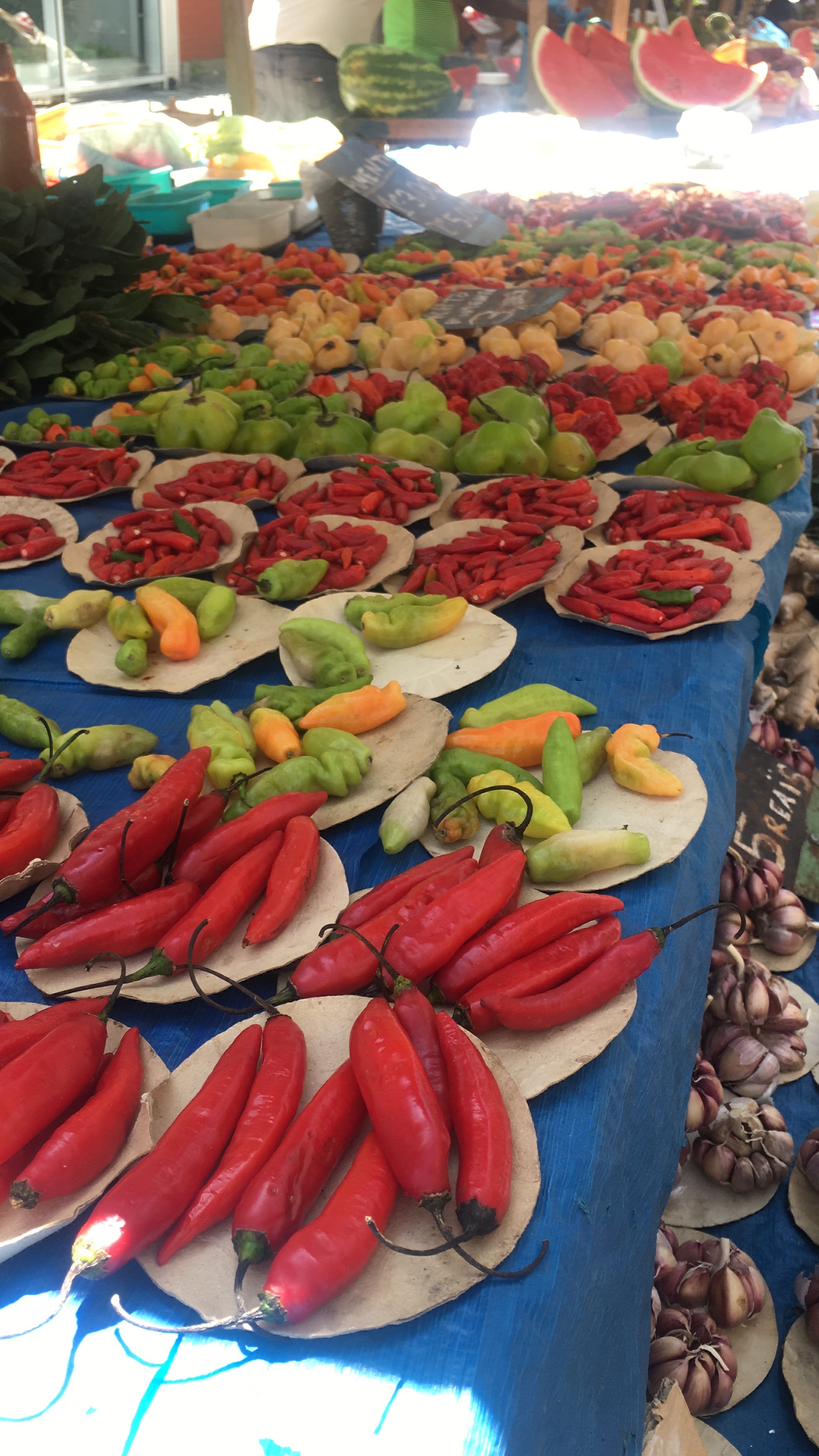
The following morning I embarked upon my first AirBnB experience for a 6 hour walking food tour where we’d meet at a farmer’s market before moving on through different neighborhoods to try different foods from all parts of Brazil. This was one of the best experiences I had – Vinicius, the guide, was a veritable walking encyclopedia of fun facts and information about the food and culture of Rio. During the tour, we ate and drank so many delicious things, all while getting to sight-see. I learned that fejoida, one of Brazil’s most popular dishes, was created by enslaved peoples from Africa who made the soup from leftover pieces of pork and black bean soup – it’s a very heavy meal that was traditionally eaten for lunch on Saturdays so people could nap after. Some of my other favorite dishes were bolinhos de bacalhau (salt cod croquettes), pastel de nata (Portuguese custard tart), and, of course, pão de queijo. There were so many more delicious foods from all over the country that we tried, including a soup from the Amazon called tacacȧ – the jambu leaves in the soup cause your tongue to go numb! I would highly recommend looking into this tour or a similar walking tour to be guided by a local and experience parts of Rio from a local’s viewpoint.
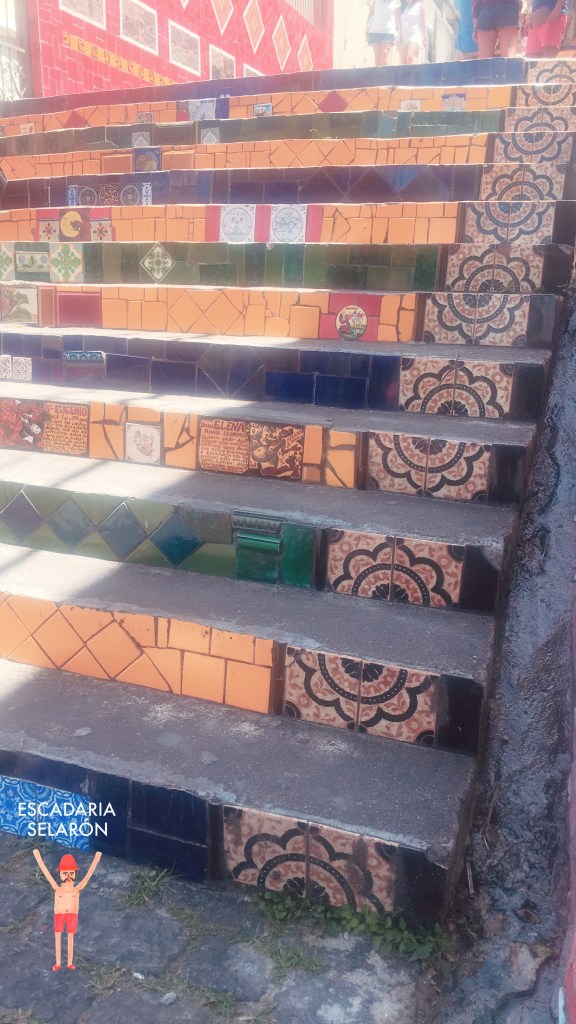
During the tour, we also did some sight-seeing and one of my favorite things was Escaderia Selarón, or the Selarón Steps. This work of art was created by Chilean-born artist Jorge Selarón, and is a set of 215 steps covered in about 2,000 tiles, some sourced from different parts of the world and some hand-painted by the artist himself. It would take quite some time to examine each tile, especially as the stairs are often crowded.
After thoroughly stuffing myself with all the delicious food during the tour, I took the metro to Pão de Açucar (Sugarloaf Mountain), which is one of Rio’s famous landmarks. The mountain was supposedly given its name because it resembles the shape of concentrated and refined loaf sugar. To get to the mountain, you have to take a cable car, which affords you an amazing view of the Copacabana beach and an aerial view of the city. The mountain itself is quite calm and there are numerous little paths you can take to explore – you will likely come across quite a few monkeys as well!

I ended my foodie day by going to Bar Urca, where I had several types of pastéis while sitting on the sea wall along Guanabara Bay, enjoying the sun set behind the Christ the Redeemer statue. Pastéis are thin-crust hand pies that are often a half circle or rectangular, and can be savory or sweet.

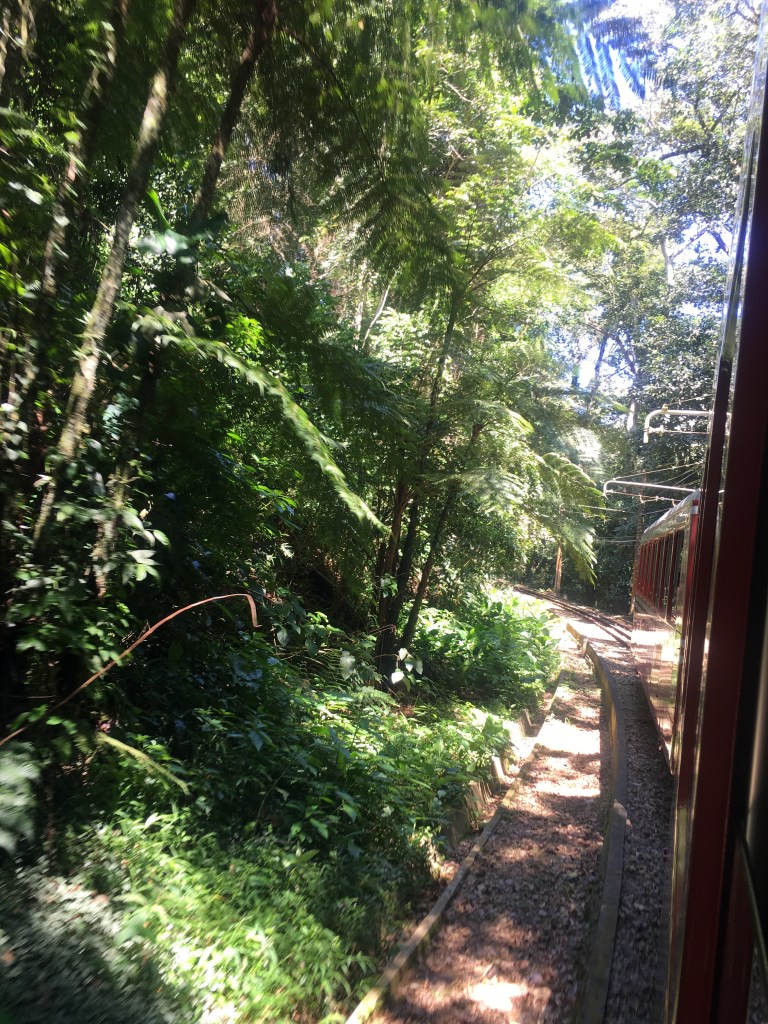
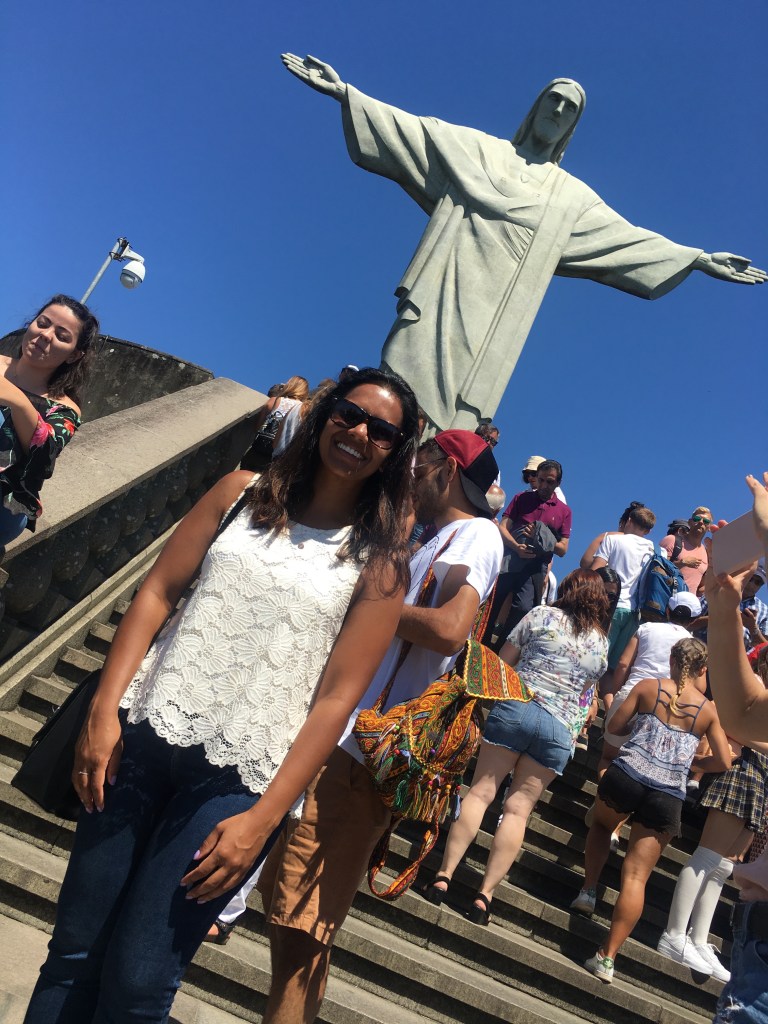
Following the previous night’s sunset, I headed off to go see Cristo Redentor (Christ the Redeemer) in person. At 30m tall, the statue is the world’s largest Art Deco sculpture and sits atop Corcovado mountain. There are a few ways to get up to the top of the mountain, but I chose to take the cog train as it’s the most scenic – definitely buy your ticket ahead of time to avoid any lines. The 20 minute ride up the mountain was really lovely – a chance to be in what felt like the middle of a tropical forest with glimpses of the city below.
Upon reaching the top, you’re met with amazing views of Rio with the statue towering over you. I walked around the entire statue to take in the view from all angles, and after taking a few pictures of the statue, asked a fellow tourist to take a picture of me. I travel solo quite frequently and have learned the best way to have someone take your photo is to offer to take one for them – a good way to avoid any pickpockets since tourists are often there for the same reason!
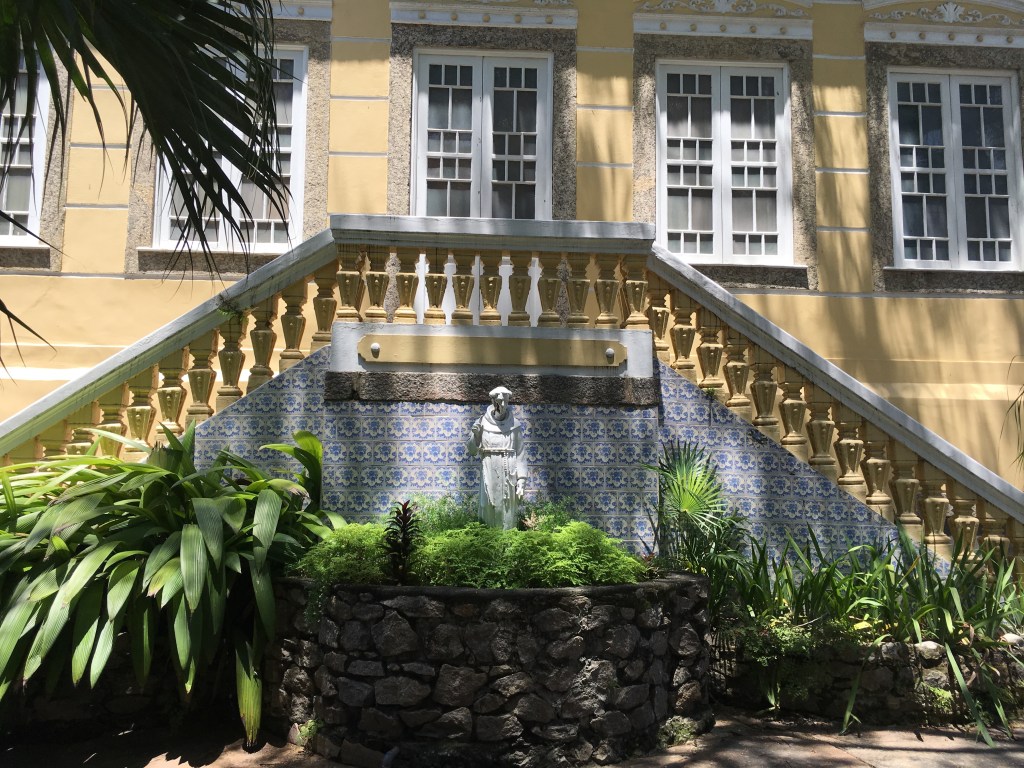
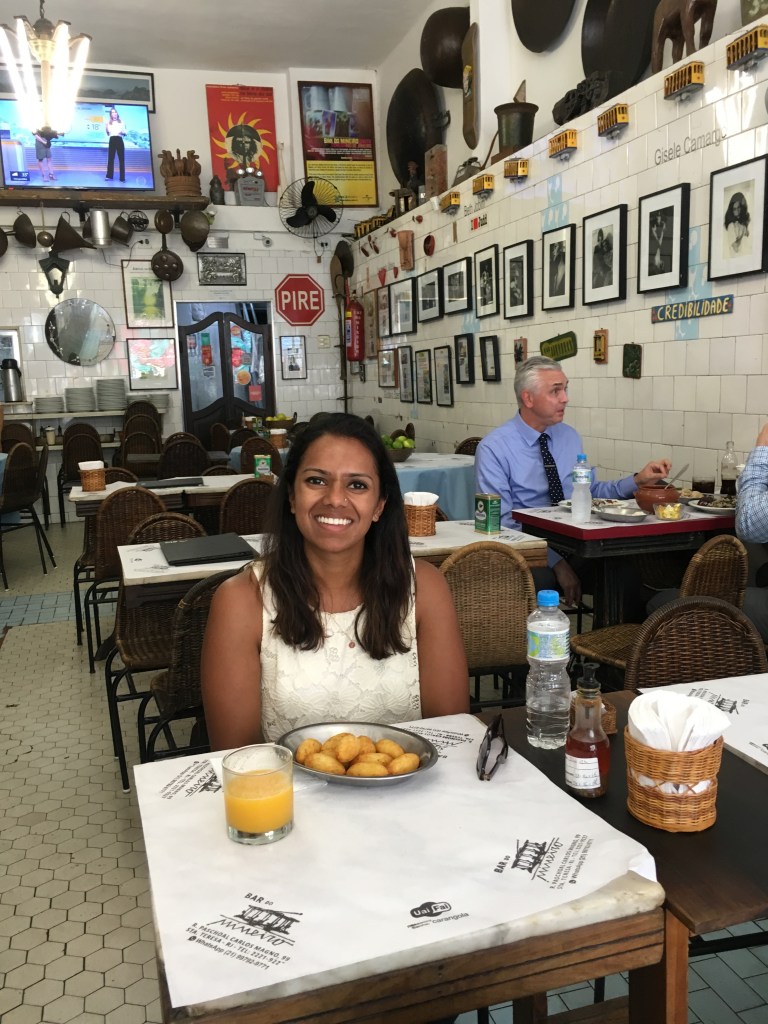
After making my way back down the mountain, I headed over to Santa Teresa, which is a neighborhood situated on a hilltop. It’s known for it’s village-like feel, with winding streets and lots of mansions. I was pretty hungry after all my exploring, so I stopped off at Bar do Mineiro for some fresh passion fruit juice and shrimp pasteis. The staff here were all incredibly friendly and chatty, and my waiter insisted upon taking a photo of me with their delicious food.
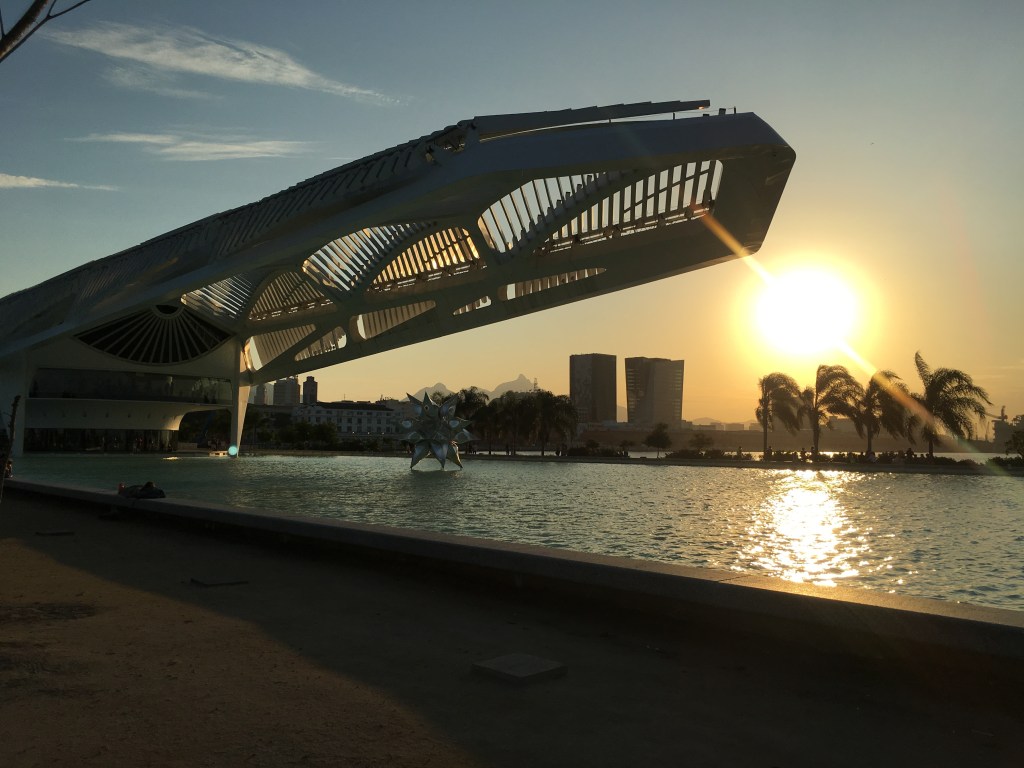
Before traveling to Rio, I was lucky enough to be connected with some friends of friends who live there, and one of these was a tour guide – perfect for me to learn more about the city. We met up following my lunch in Santa Teresa and went to the Museu do Amanhã (Museum of Tomorrow) and the Museu do Arte do Rio (Museum of Art), where they had a special exhibit on the history of samba. I learned that samba developed in the favelas of Rio in the late 19th and early 20th century, but its roots came from Africa hundreds of years before. The Museum of Tomorrow is one of the most impressive science museums I’ve been to. The entire museum is aimed at having visitors think about sustainability – of our cities and our environment – and is divided into five themes: Cosmos, Earth, Anthropocene, Tomorrow, and Us. The exhibit was thought-inspiring and so impressive – so much so that I went back to the museum the very next day to explore the interactive exhibits in more detail.
The next day started off with a swim in the ocean (I joined my colleague/host quite often for her daily swim), and I very much enjoyed the warm water – a huge contrast to the freezing cold waters of the Pacific Ocean! Later in the day, I took the metro to the Centro neighborhood, where I mailed off some postcards to friends and family before heading to Confeitaria Colombo, a café built in the 19th century with an opulent yet elegant interior. Inside, you can either sit down or do takeaway, and I opted to sit and enjoy a cappuccino and yet another pastel de nata – for someone who doesn’t normally like egg tarts, I was (and still am) hooked on these!
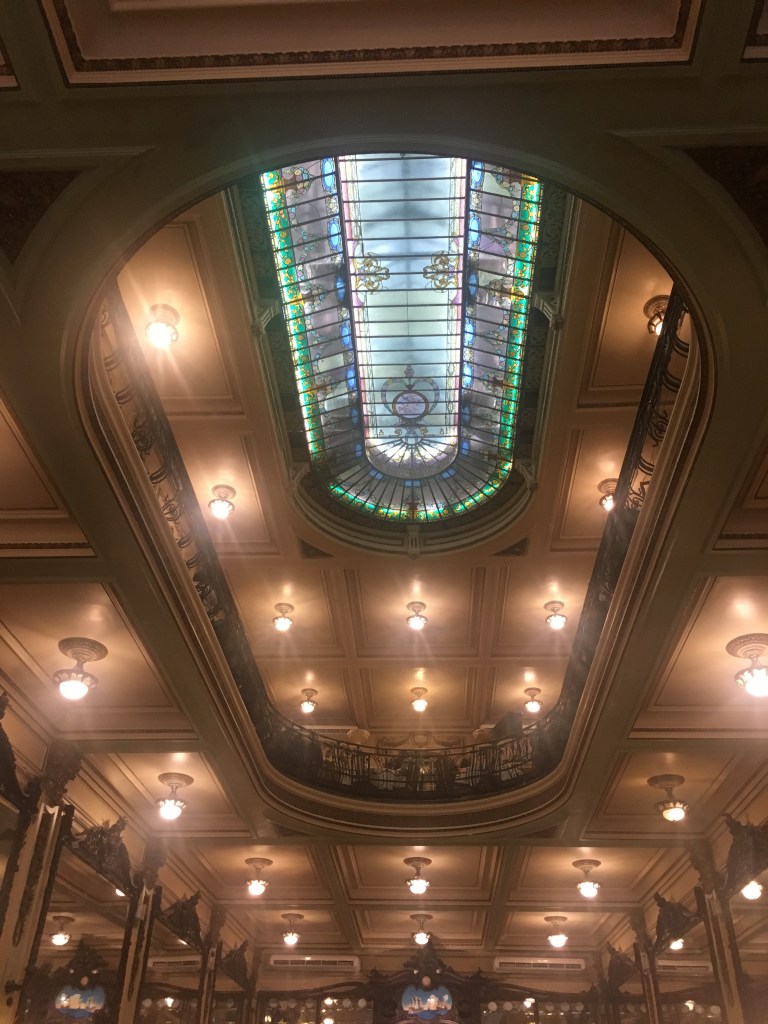
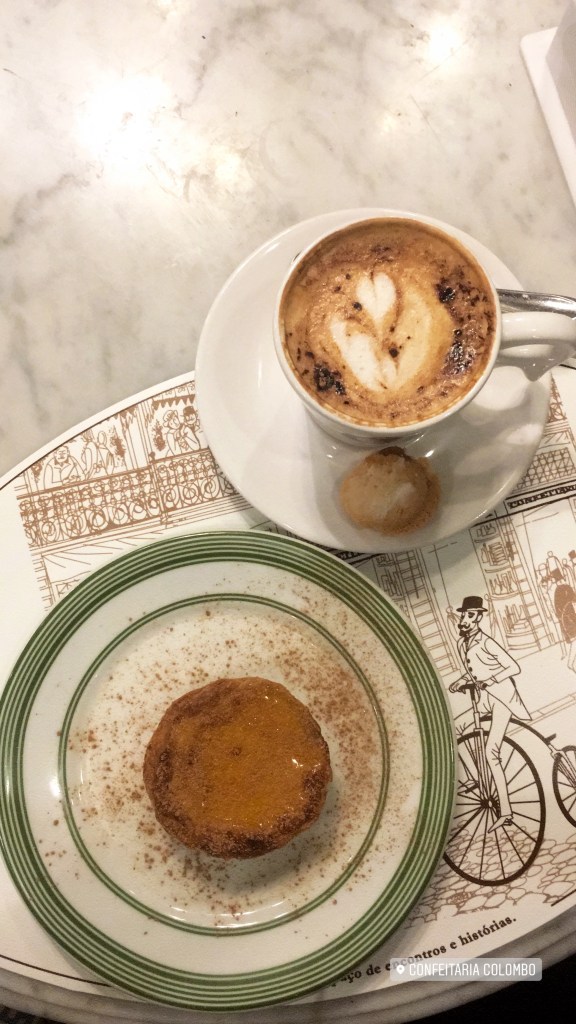
I always love wandering around cities and observing the architecture of the buildings, and Rio is filled with several styles. After my coffee and pastry, I walked over to the Centro Cultural Banco de Brasil (CCBB), which is an impressive Art Deco building with a beautiful ceiling. The CCBB also hosts various exhibits, and at the time of my visit, it housed Latin America’s largest Jean-Michel Basquiat exhibition.
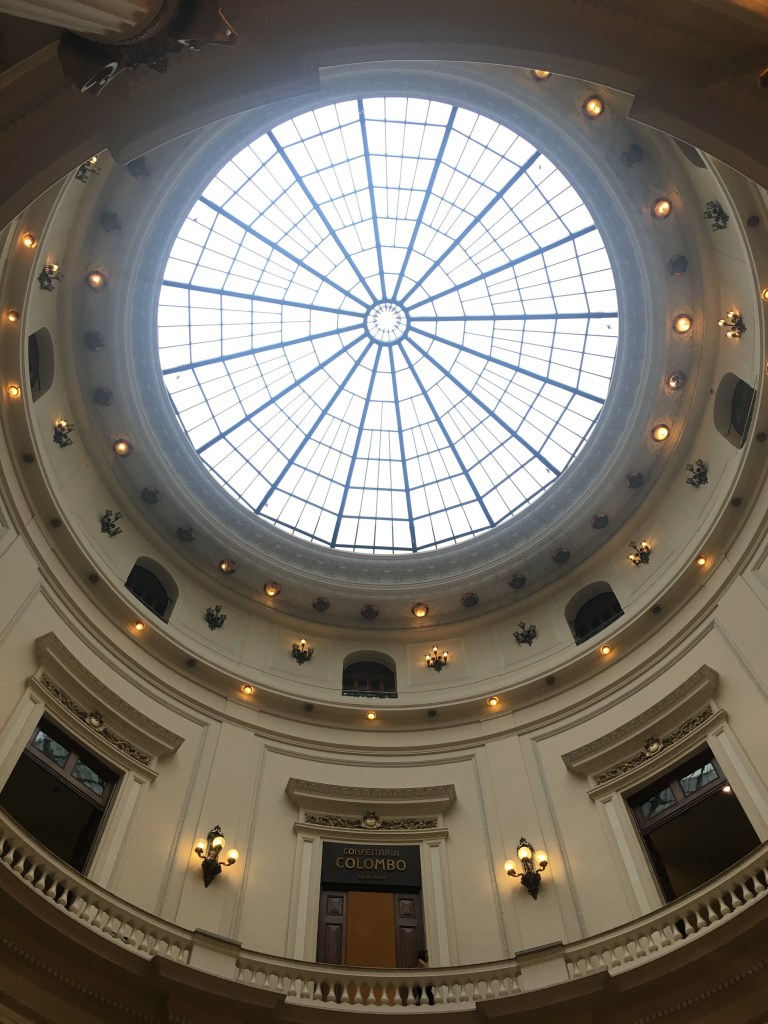
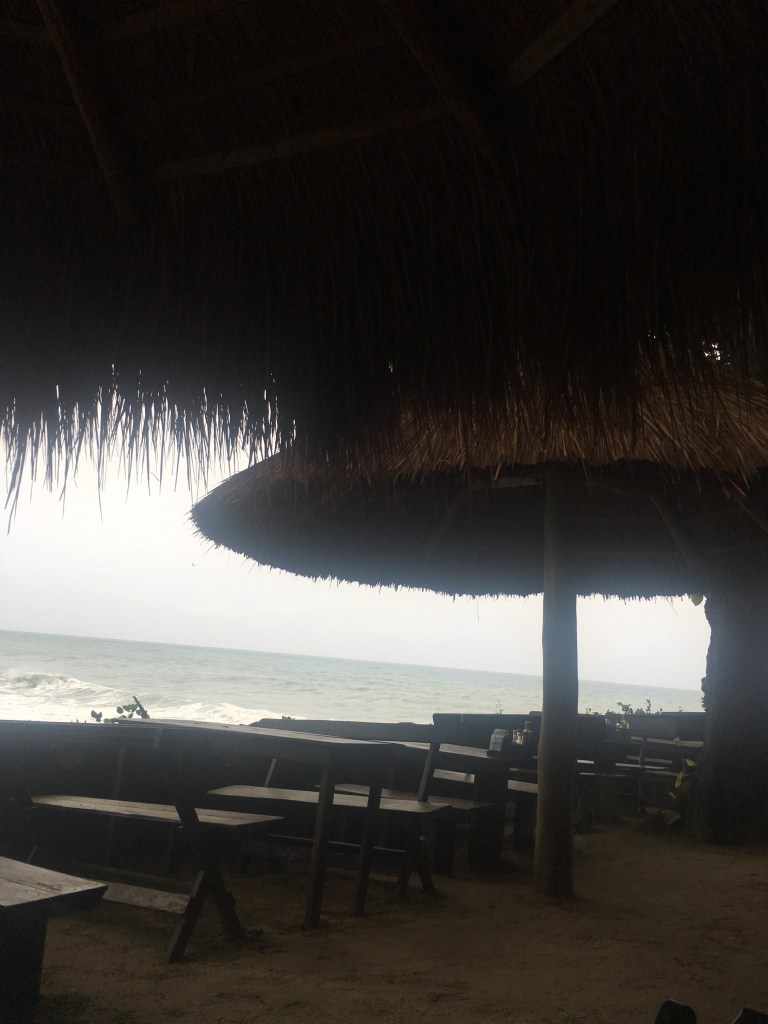
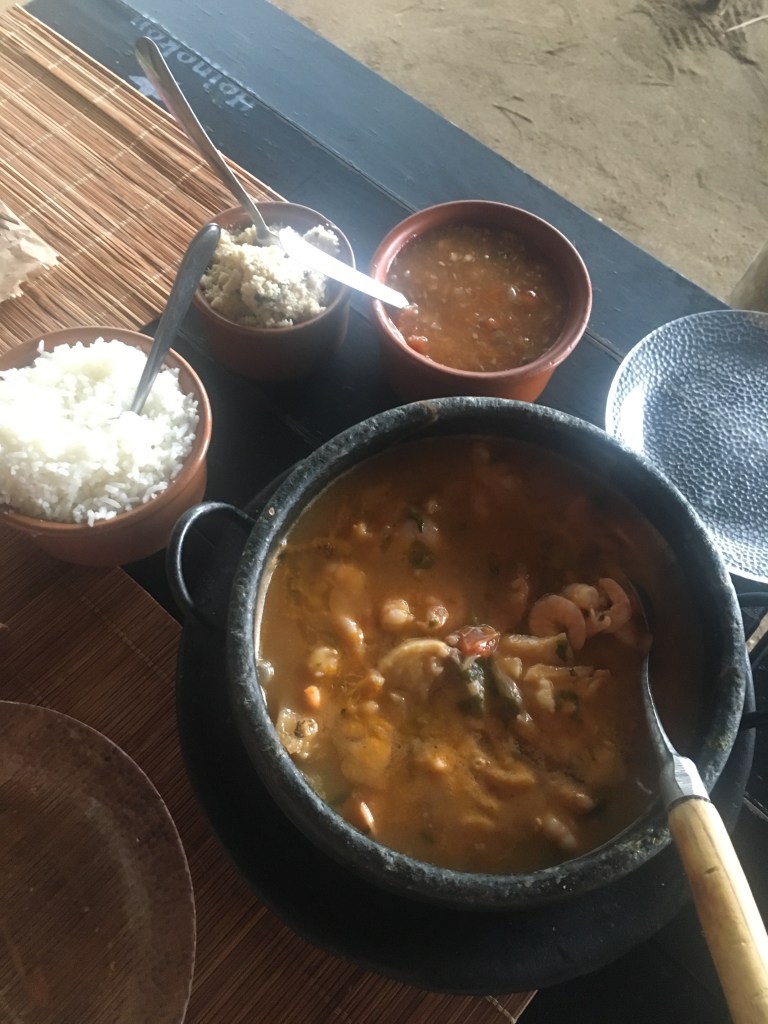
On my second to last day in Rio, some friends of friends took me out of the city to a wonderful little outdoor restaurant right by the ocean, called Mirante da Prainha. The drive there from Copacabana is almost entirely along the coast, and we stopped a few times to enjoy the view and walk along the beach. When we arrived at the restaurant, we lunched on moqueca, a traditional Brazilian seafood stew. As we ate, we were serenaded by the sounds of the waves crashing upon the shores and cooled by the ocean breeze.
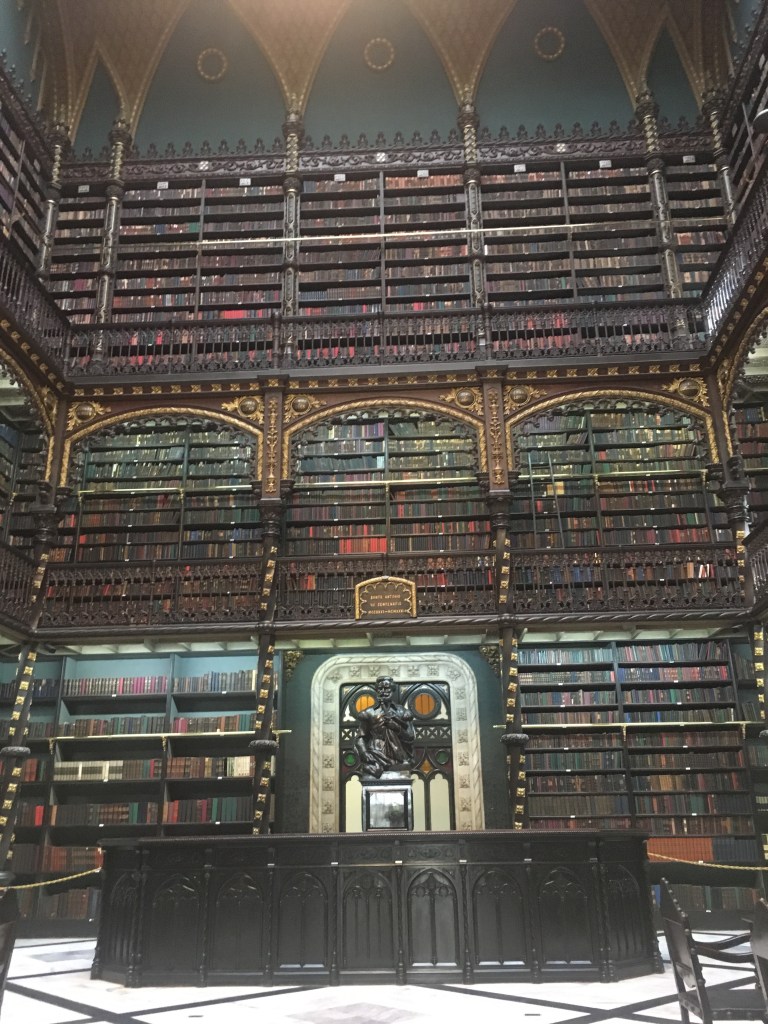
My last day in Rio arrived far too quickly – I could have spent twice as long in the city and still have more to see (and eat). Not wanting to waste even a moment of my time, I visited the Royal Portuguese Reading Room, which was a late addition to my itinerary. Upon arriving at the reading room, I knew it was well worth fitting it in. The floor to ceiling bookshelves filled with beautiful leather-bound books and the rich wood inside made me want to spend the rest of the day perusing the stacks. It now holds a place as one of my favorite libraries, and serves as inspiration for the library in my dream house.
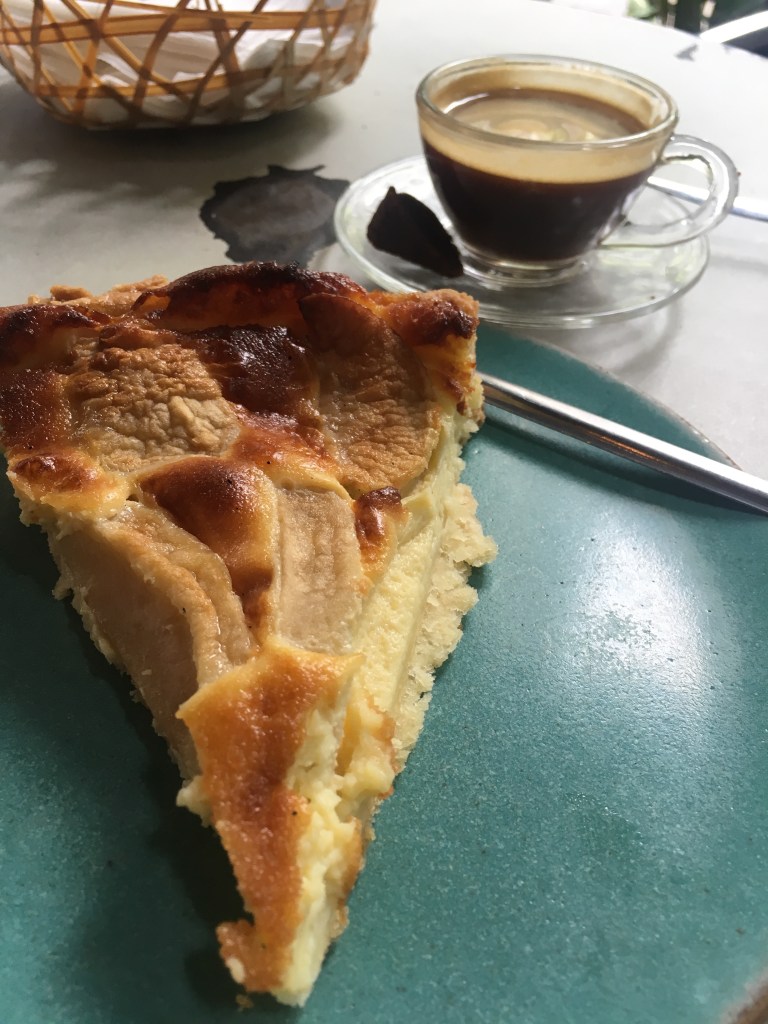
After taking in the beauty of the reading room, it was time for a snack. I made my way to the Botafogo neighborhood to stop by Marchezinho for an excellent coffee and a slice of apple cake.
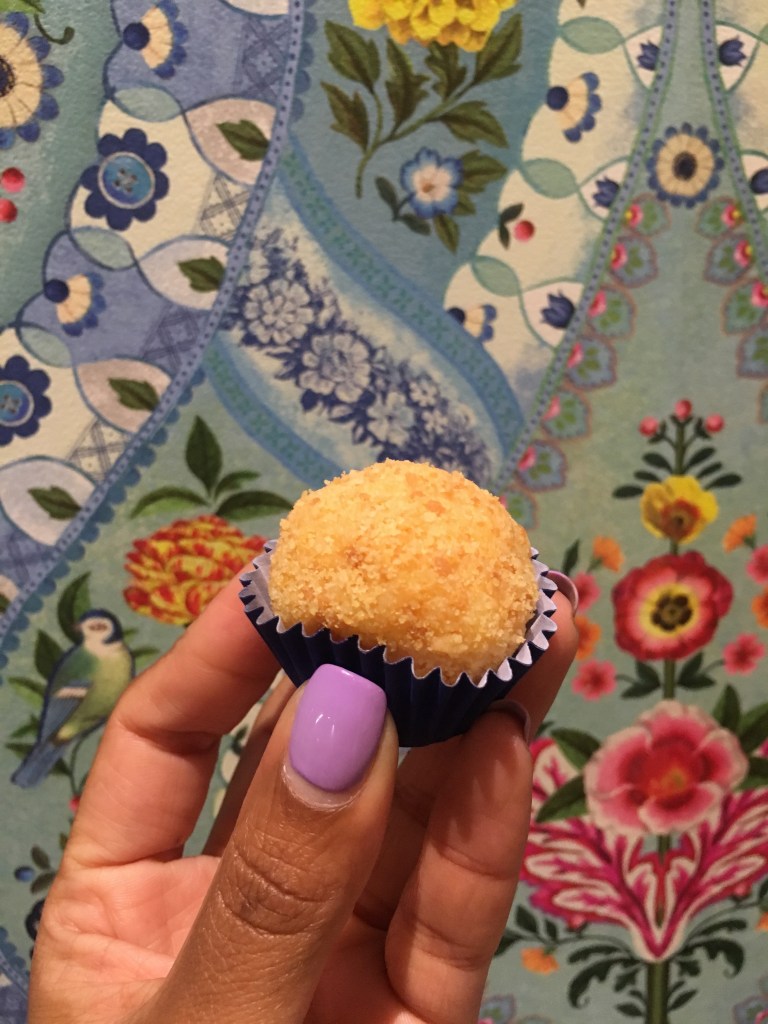
I ended my trip to Rio with brigadeiros from Brigadeiros do Tuiter in Botafogo (unfortunately permanently closed now), to have what are essentially Brazilian fudge balls, made of cocoa powder, butter, and sweet condensed milk. After buying far too many brigadeiros (most of which were gifts), I went back to Maria Açai for one last açai on the beach before heading to the airport.

I left Rio with my heart full from the warmth and friendliness of its cariocas, the beauty of its nature, and the deliciousness of its food. I hope to one day return and explore more of what Rio, and Brazil, has to offer.
 Flying Gourmet